
Vibration Isolation for Equipment, Pipework and Ceilings
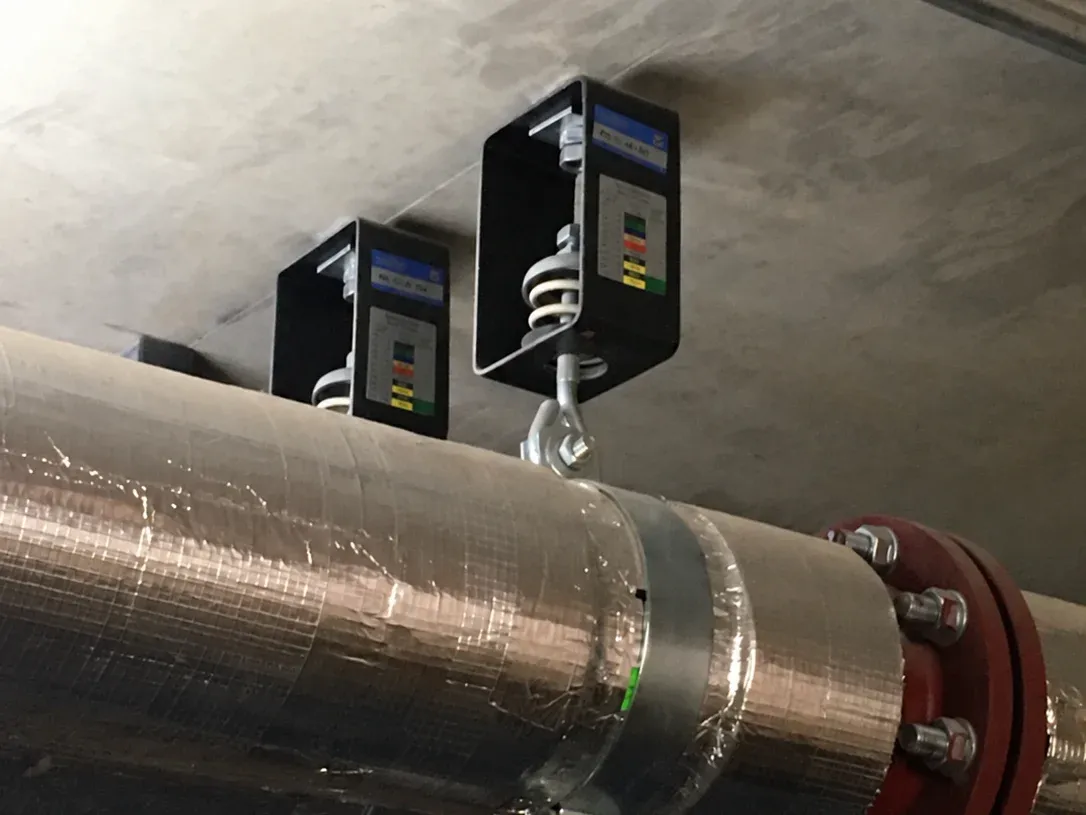
Every running machine shakes the structure it stands on, and the building carries that vibration and noise to the people inside. An isolator puts a soft link between the two, under HVAC equipment and industrial refrigeration compressors alike, and above pipework and suspended ceilings. Which one depends on the equipment's running speed, its weight and where it sits.
The range
Isolators, hangers and the bases they carry
Three families of isolators, chosen by how the equipment is mounted and how fast it runs, and the inertia bases that sit on them under heavier equipment.
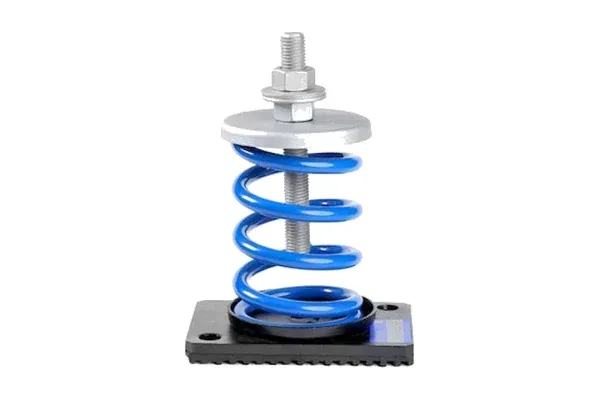
Spring Isolators
Open steel springs for floor-mounted equipment running at low speeds, where only a large deflection will do.
25 or 50 mm deflection as standard · negligible damping
See the products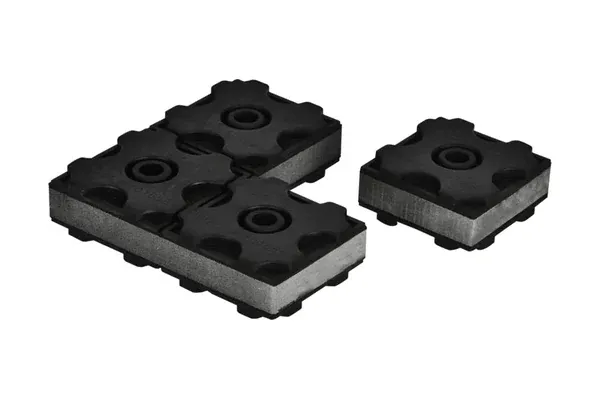
Rubber Mounts & Pads
Rubber mounts and modular pads for faster or lighter equipment.
A few millimetres of deflection · some damping
See the products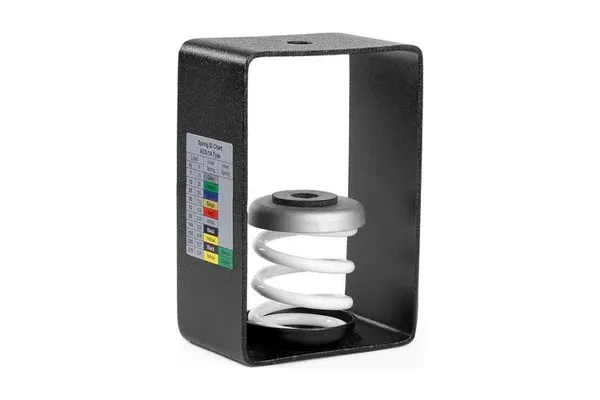
Vibration Isolation Hangers
Spring and rubber hangers for fans, pipework and ductwork suspended from the slab above.
Housed or open · spring, rubber or both
See the products
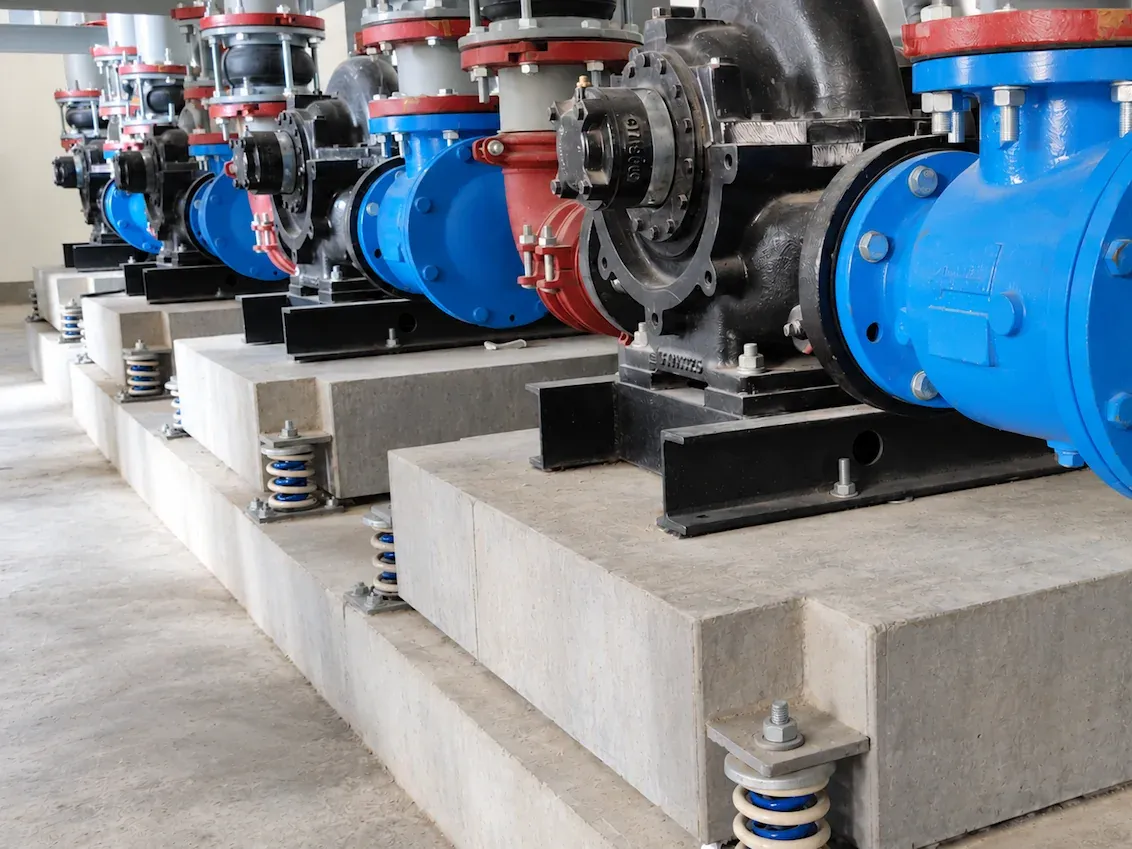
Inertia Bases
A concrete-filled steel frame under pumps, compressors and fans. The added mass lowers the centre of gravity and controls start-up rocking, so the isolators beneath can do their job. We design the base and the isolators as one system.
Welded, modular or steel only · sized to each equipment
See inertia basesChoosing an isolator
Speed, weight and position
An isolator works when the equipment runs well above the isolator's own natural frequency. Slow, heavy equipment needs the large deflection of a spring; faster or lighter equipment can sit on rubber. The table is a starting point; the selection itself is a calculation we do for you.
| Criterion | Spring Isolators | Rubber Mounts & Pads | Hangers |
|---|---|---|---|
| Where it sits | Under floor-mounted equipment or its inertia base | Under floor-mounted equipment | Between the slab above and suspended equipment |
| Running speed | Low: most pumps, fans, chillers and generators | Higher speeds and light equipment | Either, by choosing a spring or rubber element |
| Deflection | 25 or 50 mm as standard | A few millimetres | As the spring or rubber element |
| Damping | Negligible | Some | As the element |
| Typical use | Mechanical plant rooms, rooftops, energy centres | Packaged units, small fans, pads under bases | Fans, pipework and ductwork in ceiling voids and mechanical rooms |
In seismic zones
Isolation that also holds
An isolated machine moves more freely in an earthquake than one bolted down. In seismic zones the same equipment needs restraint as well: snubbers beside the isolators, or seismic isolators that do both in one mount.
Related productsSeismic Restraint Seismic isolators, snubbers and bracing for equipment and building services.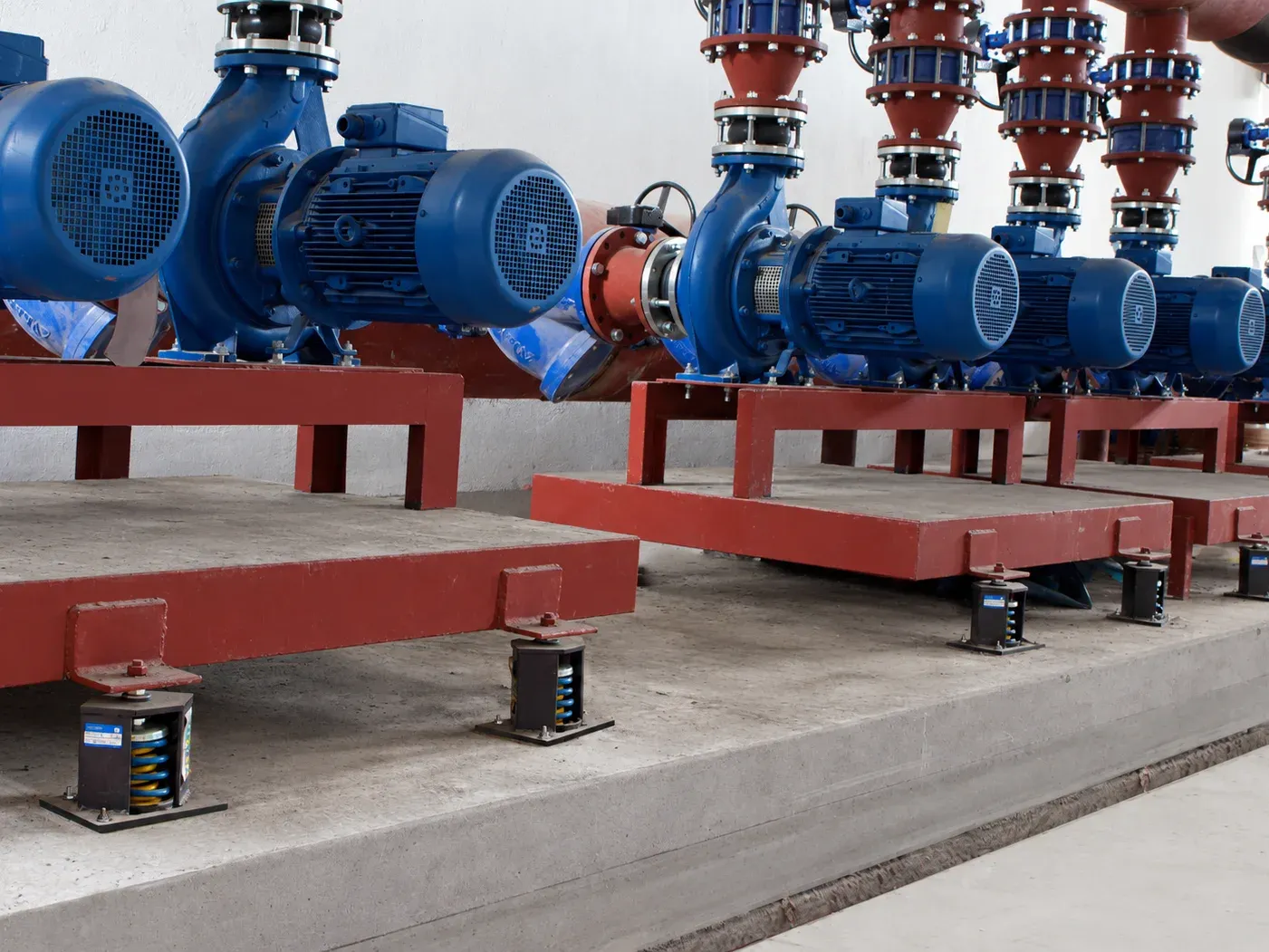

Buy online

Our standard isolators, mounts and hangers are sold through Fixing Smith, our online store. Every product card on our family pages links straight to its Fixing Smith listing.
Related engineering services

Send us the equipment and its running speed.
We will select the isolators and tell you where to buy them.