
Seismic Isolators
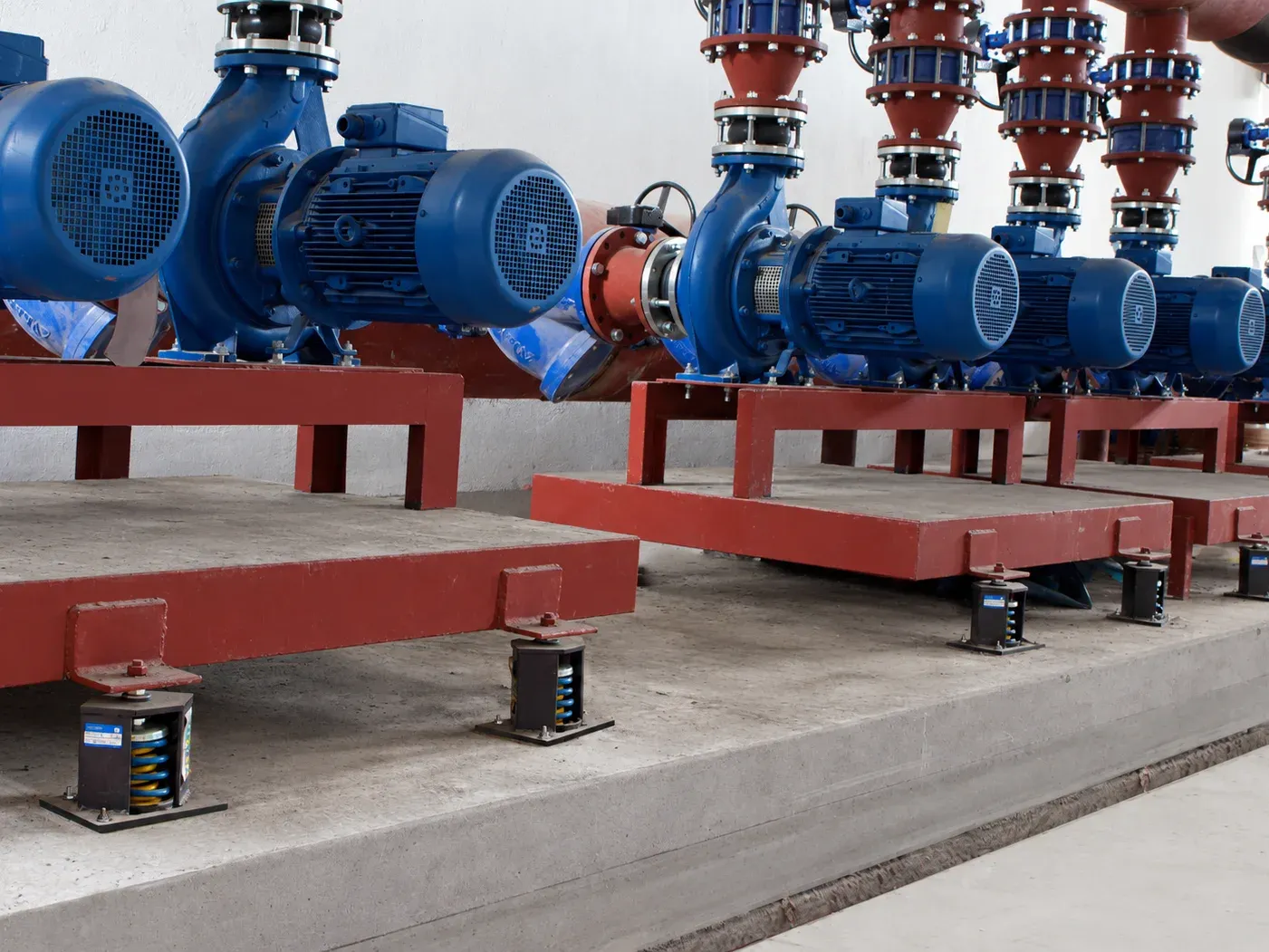
Isolation and seismic restraint in one mount, so floor-mounted equipment needs no separate snubber. The isolator keeps vibration out of the structure in normal running; in an earthquake or high wind, the restraint limits movement to 6 mm (1/4″) in every direction.
The range
Standard or heavy-duty
Every isolator here carries the equipment on steel springs or rubber and holds it inside a steel restraint. Standard sizes are available to buy online from Fixing Smith, our group company’s store. Heavier loads and project-specific isolators come directly from us.
Standard
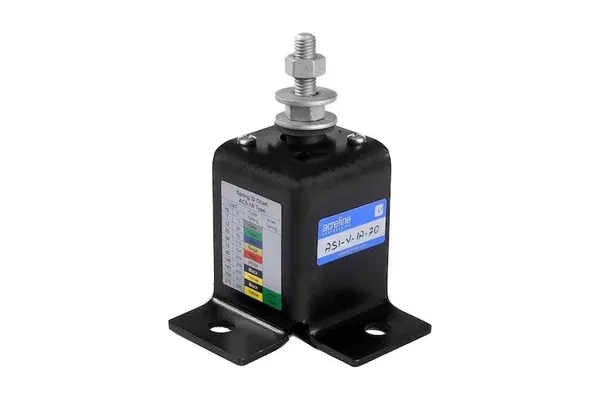 ASI-V
Restrained Spring Isolator
Steel spring in a steel housing that restrains the equipment in all directions.
Bolted or welded · 25 or 50 mm deflection · up to 1,280 kg
Buy on Fixing Smith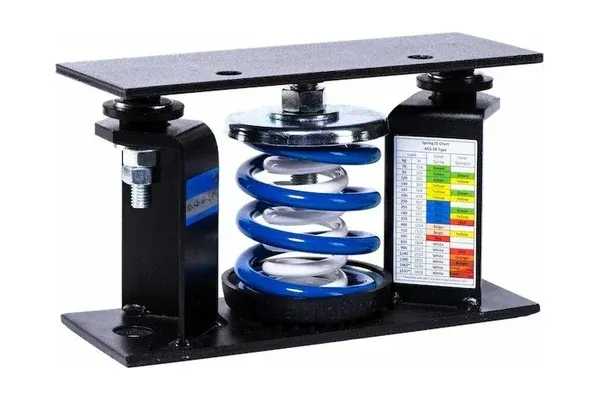 ASI-L
Spring Isolator with Top Plate
A top plate with fixing holes for chillers, cooling towers and boilers.
Field-interchangeable springs · 25 or 50 mm deflection · up to 6,220 kg
Ask us for a selection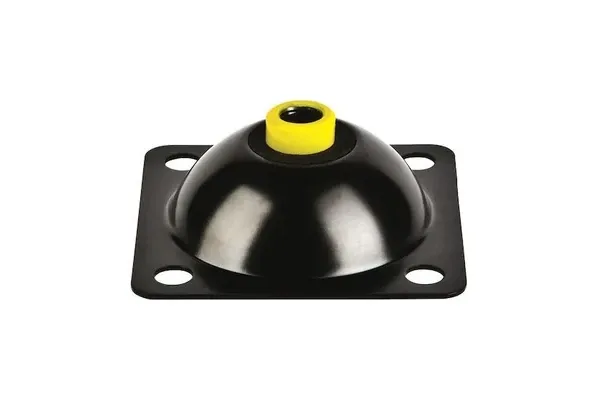 ASI-R
Seismic Rubber Mount
Seismically restrained rubber mount for higher-speed equipment and high-frequency noise.
Up to 3.4 mm deflection · up to 900 kg · 40 / 50 / 60 Shore A as standard
Buy on Fixing Smith
Heavy-duty
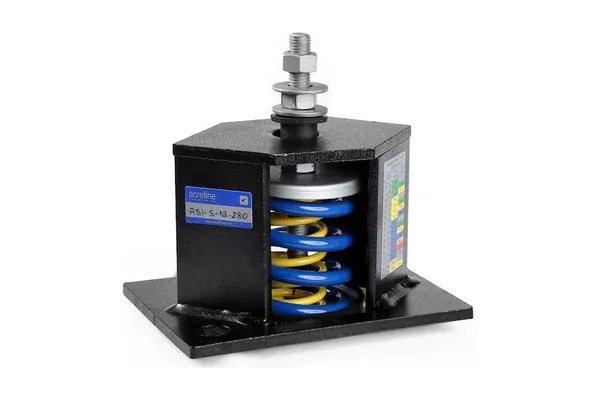 ASI-S
Welded Housing Spring Isolator
Welded steel housing with an elastomer-coated steel bushing that cushions the seismic stop.
Bolted or welded · 25 or 50 mm deflection · up to 1,550 kg
Ask us for a selection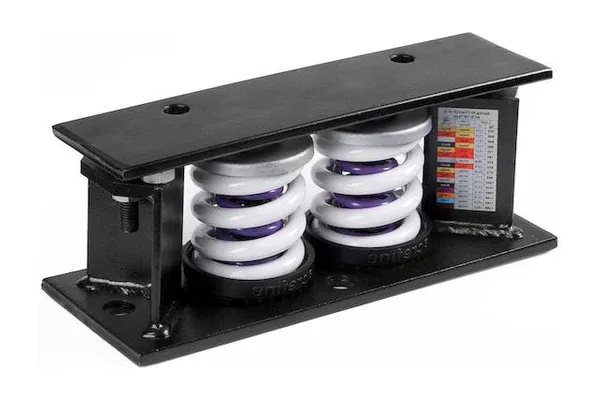 ASI-T
Heavy-Duty Spring Isolator
Welded steel housing with restraint points on every axis; springs can be replaced on site.
Colour-coded springs · 25 or 50 mm deflection · up to 6,220 kg
Buy on Fixing Smith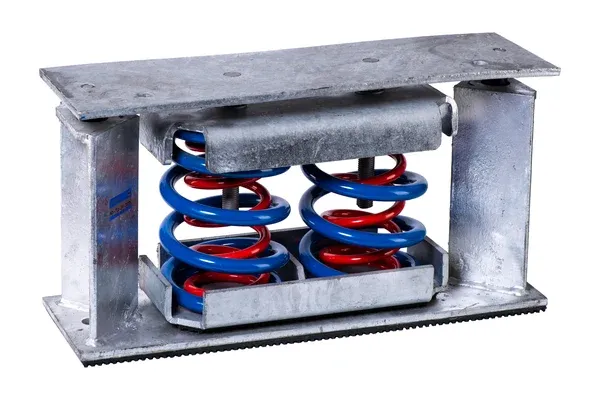 Made to order
Tailor-Made Isolators
Larger loads, longer deflections or a special housing: we design the isolator to the project.
Higher loads and deflections · galvanised housing on request
Ask us for a selection See a tailor-made installation: 3D tour ↗ (opens in a new tab)
Datasheets, installation guides and certificates Downloads
Selection
Spring or rubber, standard or heavy-duty?
Running speed decides spring or rubber; the seismic demand and the duty decide the housing. Too stiff an isolator passes the vibration through; too weak a restraint lets the equipment walk off its base.
| Criterion | Standard spring | Heavy-duty spring | Rubber |
|---|---|---|---|
| Best against | Low-frequency vibration from pumps, fans, AHUs and packaged units | Low-frequency vibration from the heaviest equipment, where the restraint takes repeated shocks | Higher-speed equipment and high-frequency noise |
| Restraint | Steel housing; movement limited to 6 mm (1/4″) in every direction | Elastomer-coated steel bushing (ASI-S) or welded restraint points (ASI-T); 6 mm (1/4″) | Steel housing around the rubber element |
| No metal-to-metal contact | Spring seated in rubber; rubber bushing where the stud passes through the housing (ASI-V) or grommets with rubber washers on the restraint studs (ASI-L) | The same details (ASI-S single stud, ASI-T top plate); on tailor-made isolators, a pad under the base plate and grommets on the anchor bolts on request | The rubber element carries the load and isolates |
| Deflection | 25 or 50 mm | 25 or 50 mm as standard; longer made to order | Up to 3.4 mm |
| Typical use | Pumps and fans in plant rooms; chillers, cooling towers and boilers on roofs and in mechanical rooms | Chillers, cooling towers, generator sets and large pumps; rooftop equipment in high wind; hospitals, data centres and other buildings that must stay in service | Transformers, generators and electrical units; motors, fans and compressors running at higher speeds |
| Range | ASI-V, ASI-L | ASI-S, ASI-T, tailor-made | ASI-R |
Heavier loads, a frequency you need to hit exactly, or equipment on an inertia base? We size tailor-made isolators for the project.
In the field
Installed on site
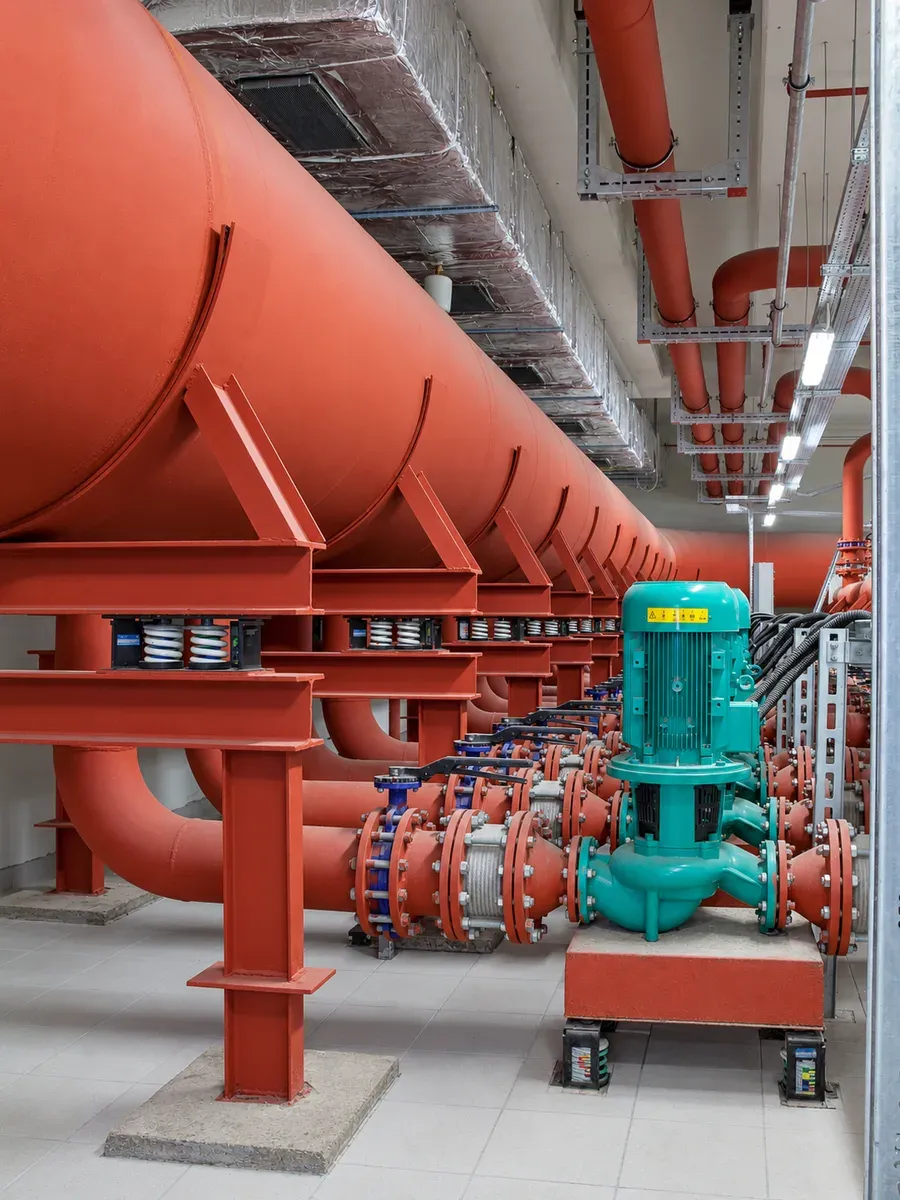
Header pipework and an inline pump, both on seismically restrained spring isolators. Granada Mall, Riyadh 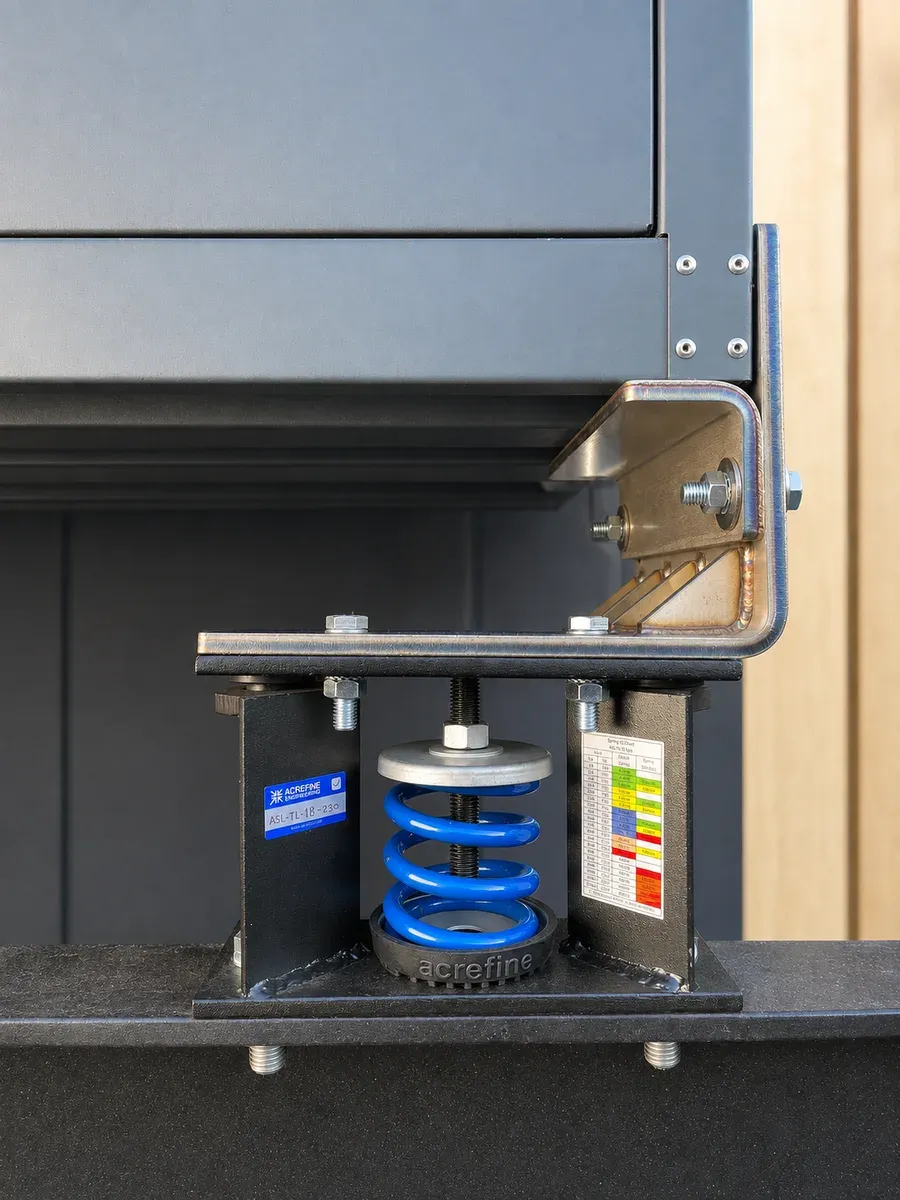
ASI-L under a heat pump at Avondale School, London. 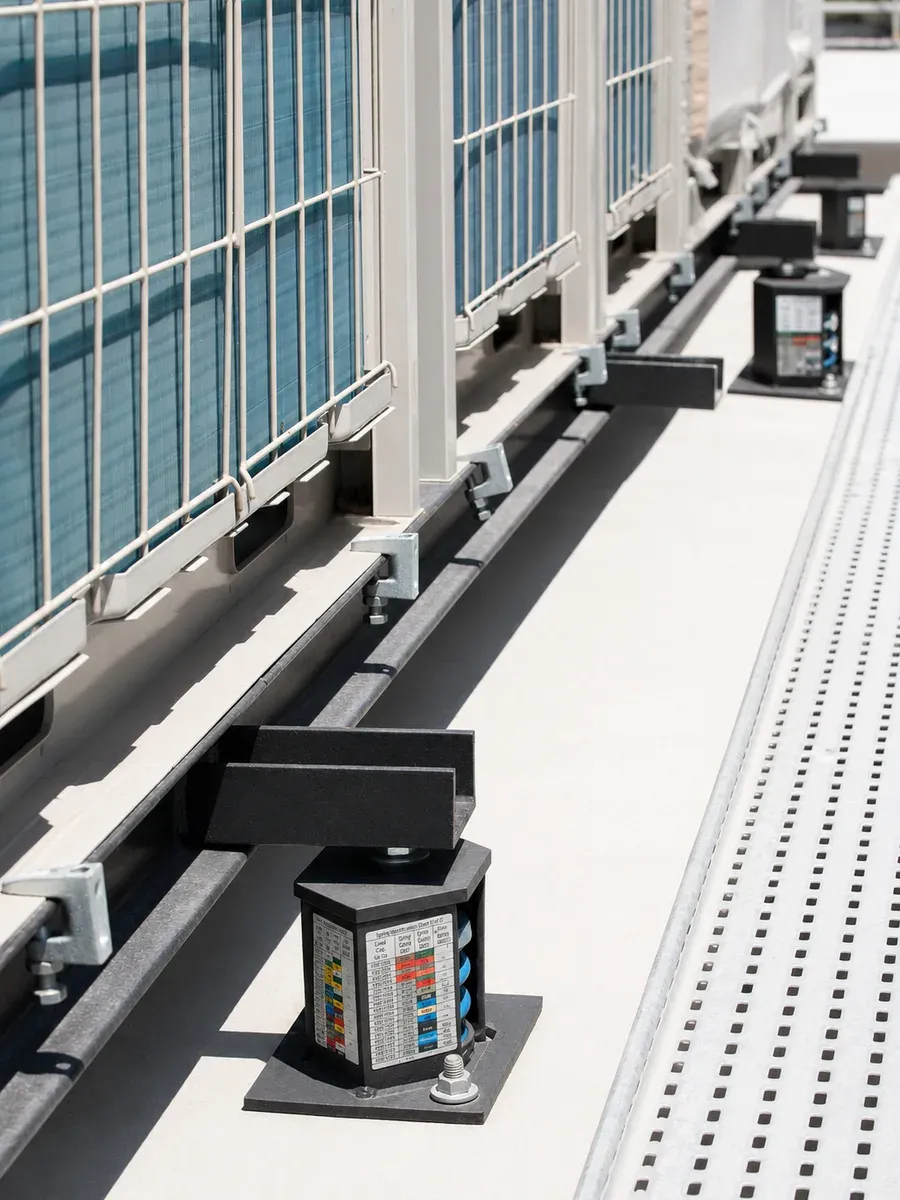
Rooftop condensing units on ASI-S isolators, restrained against seismic and wind loads. Migros HQ, Istanbul
Seismic restraint
Isolated and restrained
A spring on its own lets equipment float, and in an earthquake or high wind it lets it move: off its base, into the pipework connected to it. A seismic isolator builds the restraint around the spring. The equipment is resiliently mounted yet seismically restrained: free in normal running, and caught within 6 mm (1/4″) when the building shakes. Codes built on ASCE 7, which the IBC adopts, double the design force on a restraint when that gap is larger.
The steel restraint must not become a sound path. Every spring sits in rubber, and wherever a restraint stud passes through the housing it runs in a rubber bushing or grommet with rubber washers above and below: no metal-to-metal contact between the equipment and the slab.
The alternative is two products in combination: open spring isolators for the vibration and seismic snubbers beside them for the restraint. It suits equipment already sitting on springs, or a layout where the restraint has to stand apart from the isolator. We size the two together, so the spring deflection and the snubber gap work as one system.
Related products
Related engineering services

Describe the equipment and where it stands.
We will select the isolator and size it to the load and the seismic demand.